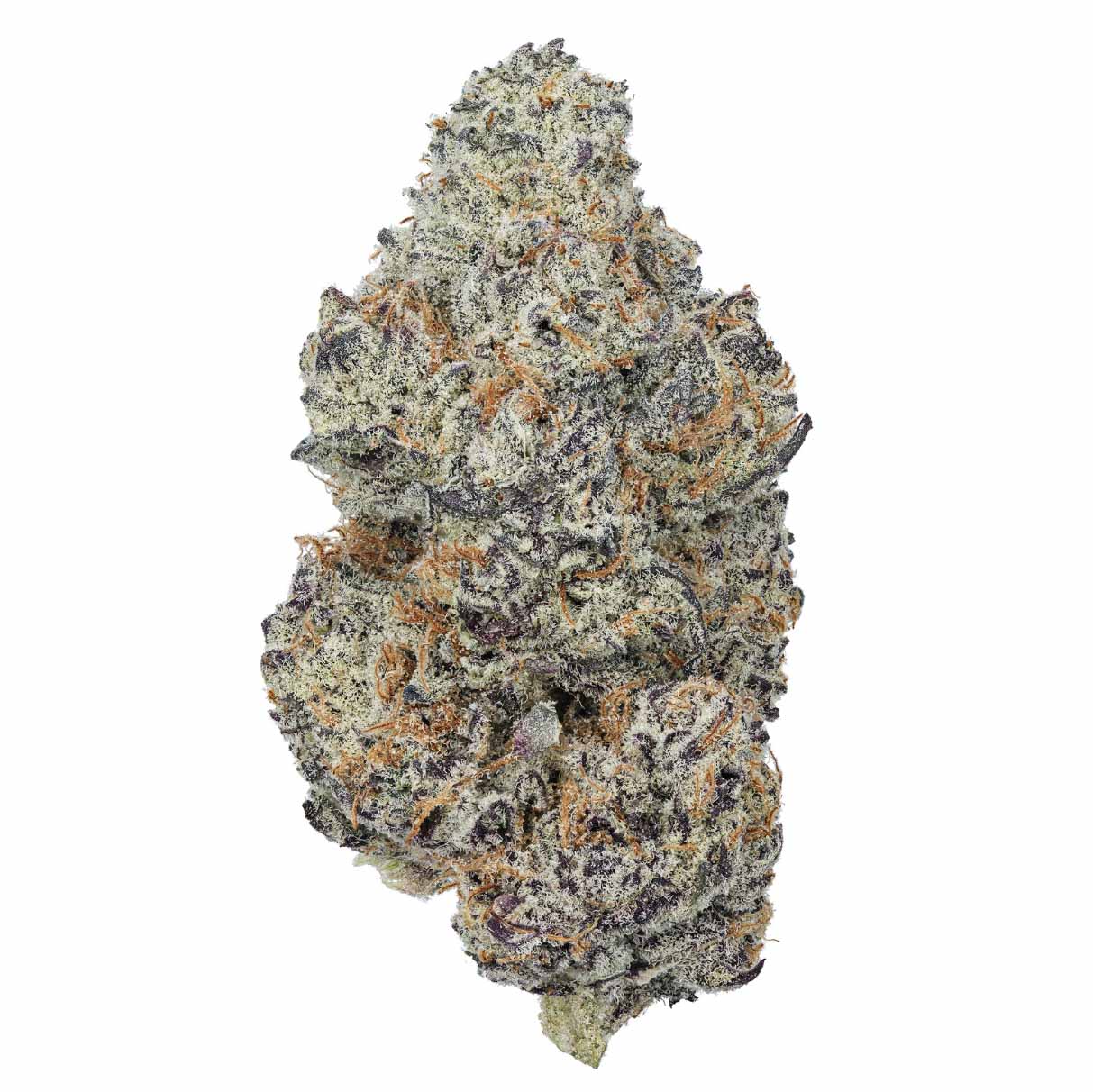
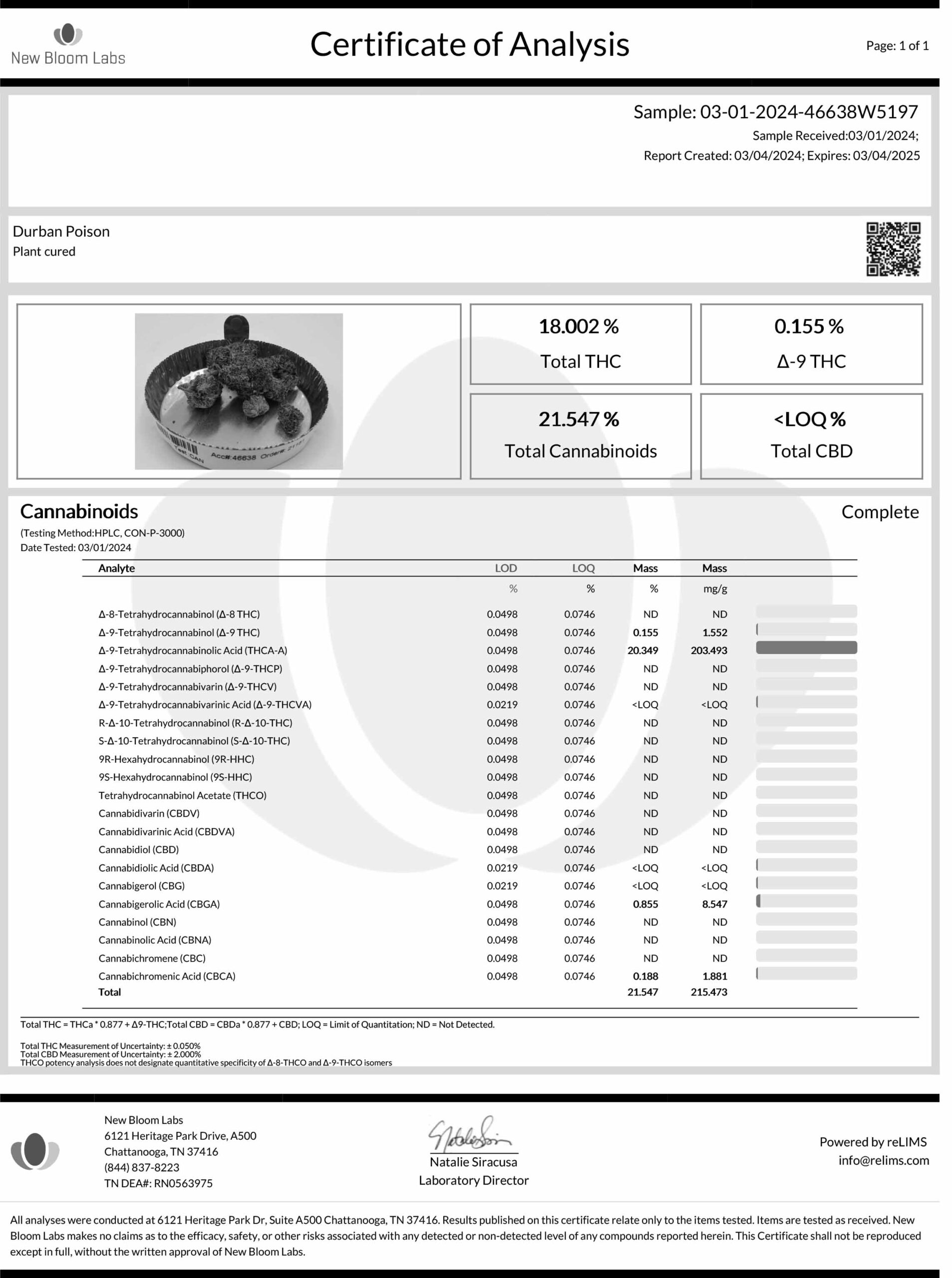
Durban Poison Strain THCa Flower — Indoor
John M named Durban Poison specifically. He had a list — purple haze, panama red, durban poison — of strains he was grateful to find still being grown and sold somewhere. He was getting ready to quit the industry before he found Sherlocks. He called what the store is doing a godSend for keeping these genetics alive.
Durban Poison does not require John M’s endorsement to justify its place on a cannabis menu. It has been continuously cultivated since the 1970s because it delivers something that no hybrid has fully replicated — a pure sativa high that is energetic, clear-headed, and specific to the genetics of a coastal South African city. But John’s recognition of it alongside Purple Haze and Panama Red is the right context for understanding what kind of store keeps Durban Poison in stock in 2026. The same standard that brought in Seeds of Kismet exclusives and Honeysuckle Magazine’s Strain of the Year is the standard that keeps landrace genetics on the shelf because they are worth keeping.
Durban Poison is a pure sativa landrace from the port city of Durban, South Africa — the cannabis that developed in and around South Africa’s Indian Ocean coast, grown in the townships and surrounding countryside for generations before Ed Rosenthal brought it to the United States in the 1970s and Sam the Skunkman helped stabilize it for the American market. It is genetically pure in the way that landrace cannabis is pure — not hybridized, not crossed for yield or speed, not modified for commercial convenience. The terpinolene and myrcene combination that makes Durban Poison immediately identifiable — the anise and earthy sweetness, the sweet pine, the slight spice — is what the South African climate and soil shaped over generations of cultivation.
The indoor cultivation is the correct environment for Durban Poison for a reason that applies to every pure sativa landrace in the Sherlocks program. Long flowering cycles, terpene profiles that require stable post-harvest handling, bud structures that benefit from controlled humidity — the same qualities that make indoor cultivation appropriate for Colombian Gold, Thai, and Panama Red make it appropriate here. Danny G smoked this batch and was taken back fifty years. That kind of accuracy to the original genetics requires a growing and curing environment calibrated for it.
The terpinolene and ocimene that produce Durban’s distinctive sweet anise and pine character are among the most volatile cannabis terpenes — they are the first to dissipate in poor post-harvest conditions and the last to develop fully in accelerated flowering cycles. Michael Z never coughs on the living soil flower. He can tell the nutrients were right and flushed correctly. The smooth, clean smoke that Michael attributes to the growing standard is the same standard that allows Durban Poison’s more delicate terpene profile to survive from the plant to the jar.
The grower’s note: pure Durban Poison landrace genetics produce unusually large, round resin glands compared to most hybrid genetics — the specific trichome morphology that made Durban Poison historically significant for concentrate production and that contributes to the heavy frosty visual. These large glandular structures require careful humidity management during the dry to prevent the resin from off-gassing too quickly. This grower uses a two-stage dry protocol for Durban Poison — an initial three-day higher-humidity hang to slow the outer surface drying, followed by a gradual humidity reduction over ten days. The aroma at the end of that process is the fully developed terpinolene expression rather than the partial version that faster drying produces.
Durban Poison Strain Genetics
Pure Sativa Landrace — Durban, South Africa | Pure Sativa (100%)
Durban Poison is not a hybrid. It is the pure sativa landrace from Durban, South Africa — cannabis genetics that developed over generations in the specific coastal climate of the Indian Ocean port city. Ed Rosenthal introduced it to the American market in the 1970s. Sam the Skunkman and Mel Frank helped stabilize it for cultivation outside its native environment. What they preserved is the specific terpinolene-dominant profile, the distinctive resin gland morphology, and the clean cerebral sativa effect that fifty years of American cannabis culture has built a reputation around.
Product Overview
| Category | Details |
|---|---|
| Brand | Sesh |
| Strain | Durban Poison |
| Also Known As | DP |
| Genetics | Pure Sativa Landrace — Durban, South Africa |
| Classification | Pure Sativa (100%) |
| Form | THCa Flower |
| Quality Tier | Indoor |
| Cultivation | Controlled Indoor |
| Available Sizes | 1g, 3.5g, 7g, 14g, 28g |
| Best For | Daytime energy, pure sativa enthusiasts, landrace collectors, anyone on John M’s list |
More landrace strains: Thai pure sativa living soil, Colombian Gold indoor special, Panama Red indoor special, Hindu Kush indoor special, White Widow light assist, Purple Haze indoor special, and the full Sesh THCa flower collection.
At our Raleigh dispensary on Hillsborough St, Durham dispensary on Broadway St, and Wake Forest dispensary on S White St — and ships nationwide. Orders over $60 ship free. First-time buyers use code SHERLOCKSFIRST at checkout.